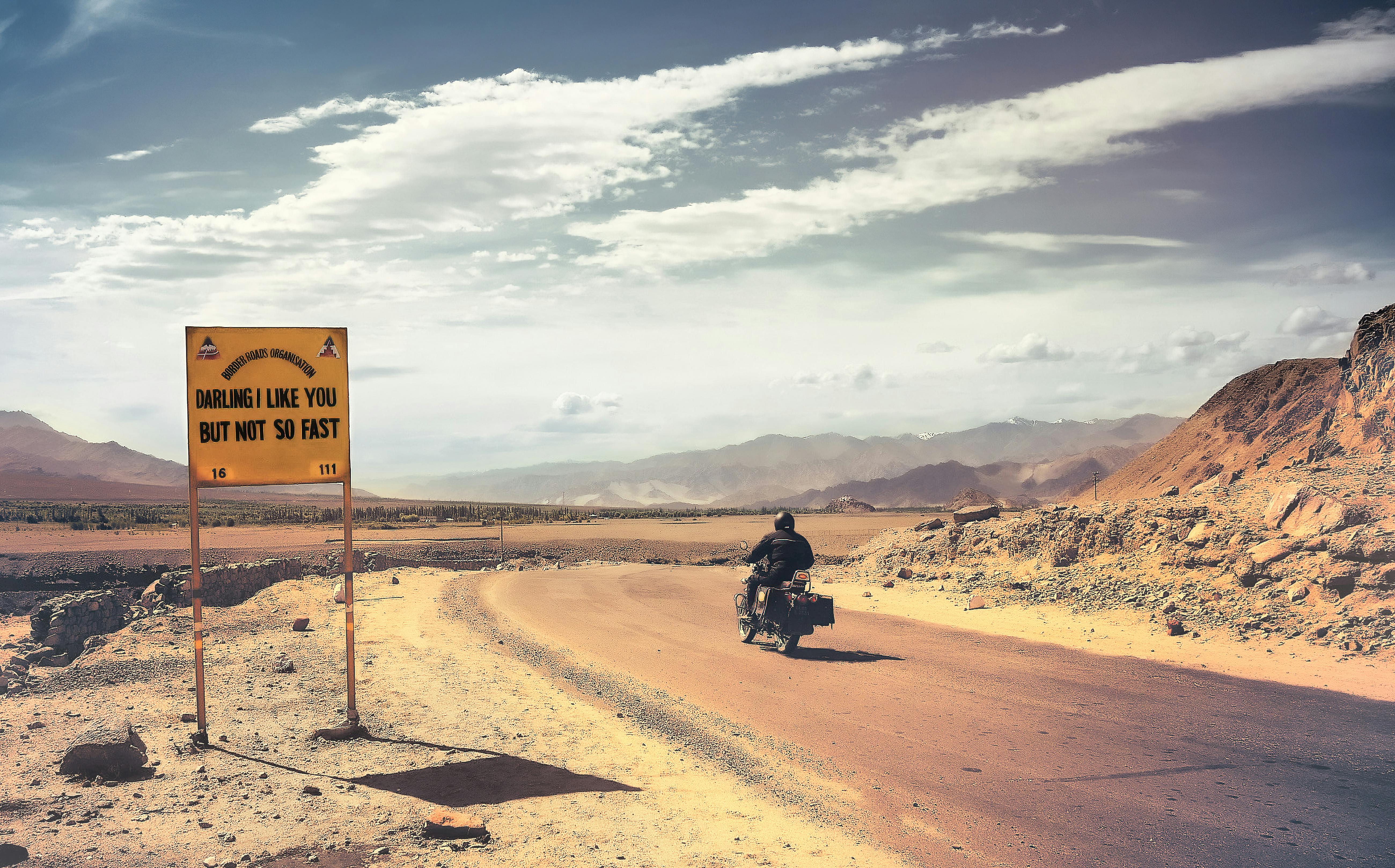
Ladakh
High-altitude desert, cobalt lakes and monasteries — India’s great road trip.
A sample 6-day Ladakh itinerary
A realistic, low-backtracking route. Generate your own — shaped to your dates, budget and pace — in minutes.
Best time to visit
May to September is the season — roads are open, skies clear and lakes accessible; July–August is busiest. The Manali and Srinagar highways are typically open roughly June to September. Winter (Oct–Apr) is extreme and largely shut except for fly-in trips and the Chadar trek.
Getting to Ladakh
Most fly into Leh (IXL) — the quickest route, but you must rest and acclimatise on arrival. The adventurous drive in via Manali or Srinagar (2 days, spectacular) which also helps gradual acclimatisation. Roads are seasonal.
Permit note: Indian travellers need an Inner Line Permit (ILP) for the protected areas — Nubra, Pangong, Tso Moriri and Dah-Hanu. Apply online or via a Leh travel agent; carry several photocopies for the checkposts.
Trip cost from India
Ladakh is mid-range; private transport over the long distances is the main cost. Per-person, per-day:
Ballpark for a 6-day trip: ₹30,000–55,000 per person incl. flights (comfort).
Veg & Jain food
Ladakhi food is largely vegetarian-friendly — thukpa, momos and dal-rice are staples, and Leh has plenty of veg and Tibetan cafés. At altitude, eat light and hydrate well; Jain options are simple but available.
Safety & scams
The biggest risk in Ladakh is altitude sickness (AMS), not crime. Acclimatise for 24–48 hours before going higher, ascend gradually, hydrate, and avoid alcohol early. Roads are remote with little connectivity.
Ladakh FAQs
No visa, but Indian travellers need an Inner Line Permit (ILP) for the protected areas — Nubra, Pangong, Tso Moriri and Dah-Hanu. Apply online or via a Leh agent and carry copies.
May to September, when roads are open and lakes accessible; July–August is peak. Winter is extreme and mostly shut except fly-in trips.
Rest 24–48 hours in Leh before going higher, ascend gradually, hydrate, and avoid alcohol early. Altitude sickness, not crime, is the real risk.
A comfortable 6-day trip is roughly ₹30,000–55,000 per person including flights, with private transport over the long distances as the main cost.